


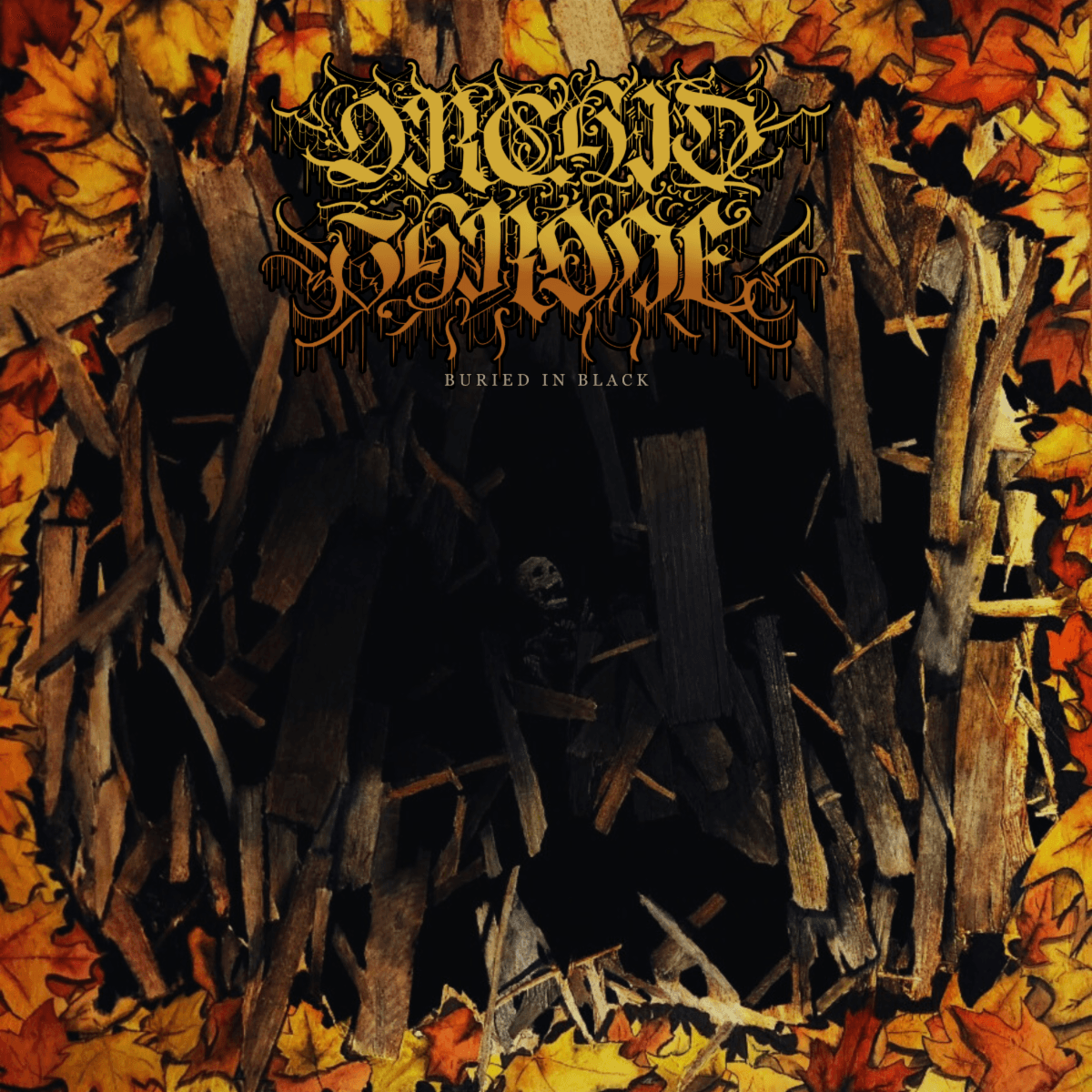
Orchid Throne – “Buried in Black” – Atanathos
Listening to «Buried in Black» for the first time is not a comfortable experience, nor is it intended to be. From its opening bars, it is clear that Orchid Throne seeks to open emotional wounds that many of us would prefer to keep closed. This debut by Nicholas Bonsanto does not function as a mere exercise in well-executed melodic doom metal; it is, above all, a work of catharsis—a personal testimony that finds in heavy music the ideal vehicle to verbalize anxiety, fear, grief, and a profound reflection on the fragility of existence.
The context of the album is key to understanding its emotional weight. Bonsanto has spent nearly two decades developing as a musician in high-level progressive and extreme metal projects, but «Buried in Black» represents something different: the first time all that experience converges into a voice entirely his own. There are no concessions here, no secondary roles, and no shared decisions. Everything—composition, performance, production, and sound—passes through a single creative filter, and that is perceived both in the album’s cohesion and its brutal honesty.
Musically, the album moves through a broad territory that starts from melodic doom metal but quickly branches out into death/doom, post-black metal, gothic doom, and even hints of folk and sludge. However, the most interesting aspect is that these elements are not presented as a list of obvious influences, but as emotional tools. Every stylistic resource is at the service of the album’s internal discourse, rather than a demonstration of eclecticism.
From «Dreamworld», an extensive and carefully constructed opening track, the general tone of the record is established: crawling tempos, dense yet deeply melodic guitars, and a constant sense of heavy, almost suffocating introspection. It is not an explosive start, but a slow immersion, as if the listener were being gradually pushed into a specific state of mind. The song’s length does not feel gratuitous; on the contrary, it functions as a necessary space for the sonic world of Orchid Throne to unfold without haste.
One of the great successes of «Buried in Black» is its control of dynamic contrast. Bonsanto understands that doom is not based solely on slowness or weight, but on the tension between calm and violence. Tracks like «Ephemerality» and «What Defines Us» alternate ethereal, almost contemplative passages with eruptions of aggression that seek to impact through emotional charge rather than volume. When the more extreme vocals appear, they do so as a natural extension of the discourse, never as a forced device.
Melodically, the album is remarkably rich. The guitars do not limit themselves to sustaining heavy riffs; they build memorable, sad, and sometimes even beautiful lines that remind us why melodic doom remains one of the most expressive subgenres of metal. There are echoes of the style’s foundational bands, but they are always filtered through a very personal sensitivity. There is no sense of direct homage or stylistic dependency: Orchid Throne sounds like itself from the very first moment.
«Moonlight Revelry» marks one of the album’s most interesting points, not only for its structure but for how it expands the record’s emotional palette. Here, folk elements and a certain dark, almost ritualistic spirituality appear more clearly. The song breathes and expands, demonstrating that Bonsanto is not afraid to momentarily step away from the weight to explore other emotional registers. These types of decisions reinforce the feeling that «Buried in Black» is not a collection of songs, but a carefully planned internal journey.
The middle section of the album delves even deeper into its introspective character. «Guilt» and «Breath of Autumn» function as emotional anchors, exploring feelings of guilt, wear and tear, and acceptance. Particularly noteworthy is the use of the flute in «Breath of Autumn»—a resource that could have felt forced in less skillful hands but is integrated organically here, providing an almost human fragility to a record dominated by density. These details reinforce the idea that «Buried in Black» is not afraid to show vulnerability.
The production deserves special mention. The fact that such a complex album was produced, mixed, and mastered entirely by its creator is no minor detail. The sound is clear, deep, and balanced, with notable attention to atmospheric layers. Nothing sounds over-saturated, and every instrument finds its space without losing punch. Far from the overproduction that sometimes plagues modern doom, there is a conscious search for naturalness and emotional rawness here.
The closing with «With Promise» is particularly fitting. It is not a triumphant ending or an optimistic resolution, but a reflective, almost resigned conclusion that leaves the listener in a state of silent contemplation. It is an ending consistent with the spirit of the album: it offers no definitive answers, but rather the sense of having gone through an honest process.
Lyrically, «Buried in Black» moves through deeply human terrain. Although it is not a conceptual album in the strictest sense, a clear thematic thread runs through all the songs: anxiety, depression, the fear of death, and the need to find meaning in the midst of darkness. There is no exaggerated drama or empty rhetoric; the lyrics feel intimate, almost confessional, reinforcing the idea that this record is a personal release rather than a product designed for mass consumption.
I perfectly understand why so many media outlets have highlighted the maturity of this debut. It is not common to find a first work that feels so sure of its identity, so aware of its limits and virtues. «Buried in Black» does not try to reinvent doom metal, but it does demonstrate how the genre can remain relevant when approached with emotional honesty and artistic ambition.
If there is anything that could be pointed out as a weak point, it would be that the album demands attentive listening and a specific mood. It is not an accessible or immediate record, and it likely won’t connect with listeners seeking quick gratification. However, this is not a flaw, but a clear artistic decision consistent with the type of work Bonsanto wanted to create.
Ultimately, «Buried in Black» is a debut that impacts through its sincerity, and its ability to transform complex emotions into a profound and immersive musical language. Orchid Throne presents itself as a project with its own voice, capable of engaging with the great references of melodic doom without being eclipsed by them. It is an album that feels necessary—not for radical innovation, but for the way it reminds us that metal, when it is honest, remains one of the most powerful emotional vehicles in existence.
Score: 9 / 10
An outstanding debut—emotionally devastating and artistically solid—that positions Orchid Throne as a name to follow very closely within contemporary doom metal.
También te interesaría leer:
AVENGED SEVENFOLD: Entre el legado y la reinvención - Metal-Daze Webzine
Fallece Tomás Lindberg la voz de At The Gates
Nomad presenta "Desert of Woe": Un himno de Post-Metalcore atmosférico y devastador - Atanathos
Graufar incendia la escena con "Buried In Flames", el segundo adelanto de su próximo álbum "Via Necr...
Acerca del autor