


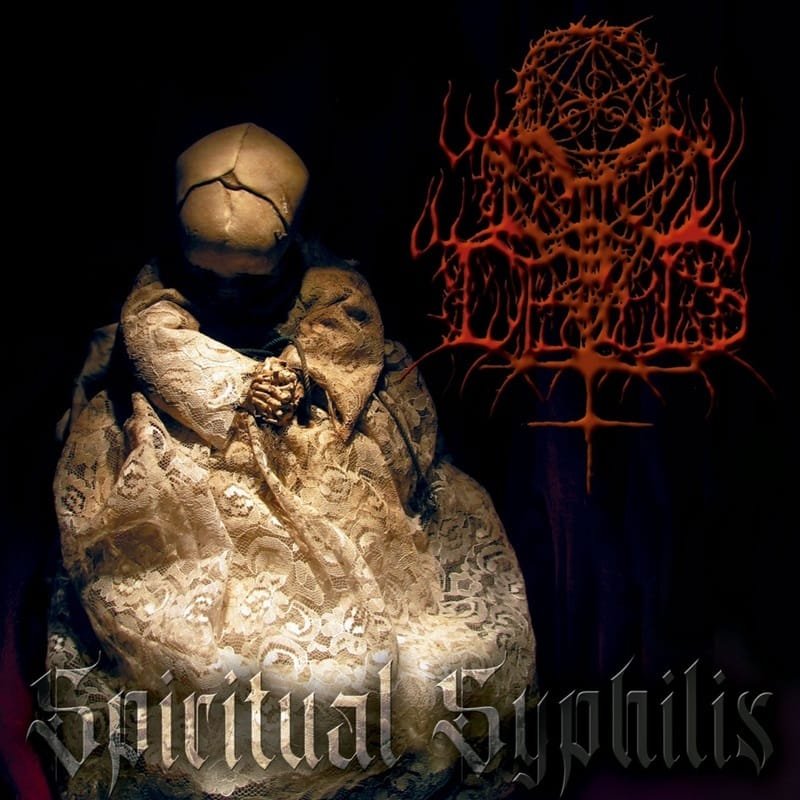
Odio Deus – “Spiritual Syphilis” – Atanathos
This is not a work that uses the critique of organized religion as a mere aesthetic resource or as an automatic inheritance from Scandinavian black metal; here, the denunciation is the conceptual axis—the fuel that feeds both the musical aggression and the lyrical discourse.
Odio Deus was founded in 2020 in Oslo by Telal, following years of experience in various black metal bands. His intention was clear: to have absolute control over the musical direction and the conceptual focus of the project. This drive for autonomy is palpable in «Spiritual Syphilis», an album developed over approximately two years, from initial conception to its final form. This prolonged maturation translates into a cohesive record, conscious of its identity and faithful to a specific vision.
Stylistically, the album combines the tradition of Norwegian and Swedish black metal with a notable influence from American death metal. This blend is not merely declarative; it is heard in the construction of the riffs, the density of the production, and the rhythmic force. While the atmosphere and certain melodic patterns harken back to the Scandinavian school—with echoes reminiscent of Mayhem, Marduk, or even the most aggressive Dissection—the punch, the structure of certain passages, and the weight of the guitars clearly connect with the tradition of bands like Morbid Angel or Deicide.
The album opens with “Curse of Jehovah”, a direct and uncompromising statement of intent. From the first bars, Telal’s drumming sets a relentless pace, alternating classic blast beats with heavier, denser sections that reinforce the death metal influence. The guitars, handled by Braatebrann and Winterheart, build a sharp sonic wall with riffs that oscillate between traditional rawness and a more technical, compact approach. The vocals, raspy and aggressive, do not seek melodic sophistication: they transmit rage, contempt, and confrontation.
“The Con Man” continues in this vein but introduces interesting variations in dynamics. Here, more work is perceived in the transitions, with tempo changes that provide tension and prevent monotony. It is precisely in these details where the time invested in composition is appreciated. We are not looking at a succession of tracks built on repeated formulas, but at a set that seeks to maintain intensity without sacrificing structure.
The third track, “The Chosen People”, delves deeper into the album’s critical discourse. Without resorting to gratuitous provocation, the lyrics address manipulation and the use of dogma as a tool of power. Musically, the track stands out for an especially solid central riff with an almost martial air that reinforces the sense of confrontation. The production, though raw in essence, allows each instrument to be clearly distinguished—something fundamental in a genre where excessive saturation can dilute the strength of the compositions.
The title track, “Spiritual Syphilis”, is likely one of the most representative moments of the album. Here, the fusion between black and death metal reaches its most balanced point. The track’s structure alternates fast, abrasive sections with heavier, almost oppressive parts, creating a contrast that bolsters the impact of the main chorus. The metaphor of «spiritual syphilis» functions as the record’s conceptual core: the idea that certain forms of organized religion act as a disease that corrodes from within, disguised as virtue.
“Deceiver” and “Lenkene er brutt” maintain the level of intensity, albeit with different nuances. The former leans more toward traditional black metal with a more linear and atmospheric focus, while the latter—whose Norwegian title translates to “The Chains Are Broken”—introduces a slightly more epic, almost liberating tone. It is interesting how the use of the Norwegian language in some tracks provides authenticity and reinforces the project’s identity.
“Svik” and “Glossolalia” explore somewhat more experimental territories within the established framework. In “Glossolalia”, for example, the concept of speaking in tongues—associated with certain religious movements—is musically translated into a more chaotic structure with abrupt changes and a sense of deliberate disorientation. It is not an easy track, but it is one of the most interesting from a conceptual standpoint.
The closing track “Til evig tid” (“For Eternity”) functions as a somber and forceful epilogue. There is no redemption or final concession; the album ends by reaffirming its critical stance, leaving a sense of unresolved conflict. It is an ending consistent with the overall spirit of the work.
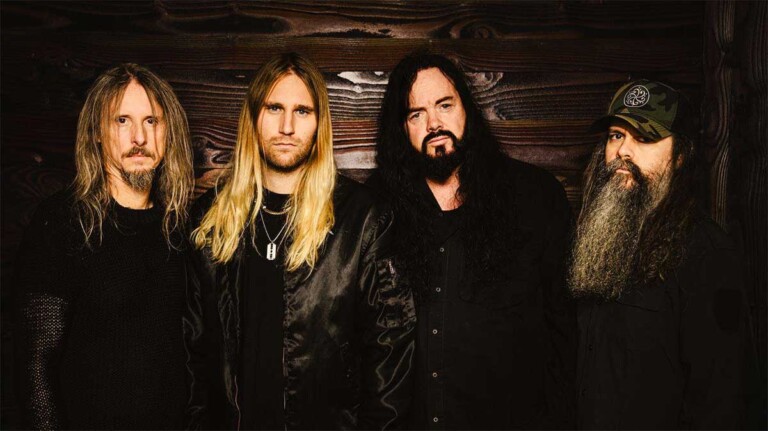
One of the most remarkable aspects of «Spiritual Syphilis» is its internal coherence. Despite the variety of nuances, the record maintains a clear identity from start to finish. The collaboration between the three members—Telal, Braatebrann, and Winterheart—feels fluid and well-oiled. There is no sense of excessive individual ego; everything is at the service of the project’s global vision.
Regarding production, the album strikes a balance between rawness and clarity. It doesn’t seek the extreme lo-fi sound of the first wave of Norwegian black metal, nor does it lean toward excessive polish. The result is a robust sound with dense guitars, powerful drums, and a bass that provides depth without being buried in the mix.
From a critical perspective, «Spiritual Syphilis» does not reinvent the genre, but it doesn’t need to. Its value lies in the solidity of its execution and the honesty of its proposal. In a landscape where many bands resort to anti-clerical aesthetics as a cliché, Odio Deus builds a discourse that, at least in its premise, seems to arise from real conviction rather than a simple image strategy.
Are there areas for improvement? Yes. In some sections, the constant intensity can feel somewhat homogeneous for listeners seeking greater atmospheric variety. Likewise, although the fusion with death metal is well-achieved, at certain points it could be explored with more technical or structural depth to provide even more personality.
However, these details do not tarnish the whole. «Spiritual Syphilis» is a solid, coherent, and committed debut (or first full-length) that positions Odio Deus as a band to watch within the Scandinavian underground. It is not a complacent record designed to please everyone; it is a confrontational, intense work true to its vision.
Score: 8.5 / 10
Ultimately, I consider «Spiritual Syphilis» to be a notable work within contemporary black/death metal, possessing identity, conviction, and more than competent execution. An album that does not seek to be comfortable, but rather necessary for those who connect with its message and sound.
También te interesaría leer:
Pig's Blood firma con Dark Descent Records y anuncia su Nuevo álbum: "Destroying the Spirit" - Atana...
¡NO TE PIERDAS EL CONCIERTO DE STRYPER EN LIMA Perú !
CORROSION OF CONFORMITY — “Una leyenda del metal con raíces punk”
Rainover consolida su proyección internacional y estrena el lyric video de "First Love" - Atanathos
Acerca del autor